
Culture · 4 min read · 12 August 2026
The language that disappeared with one woman
Until 1993, there was still one person who spoke Vlielands. When she died at the age of 107, the language was gone.
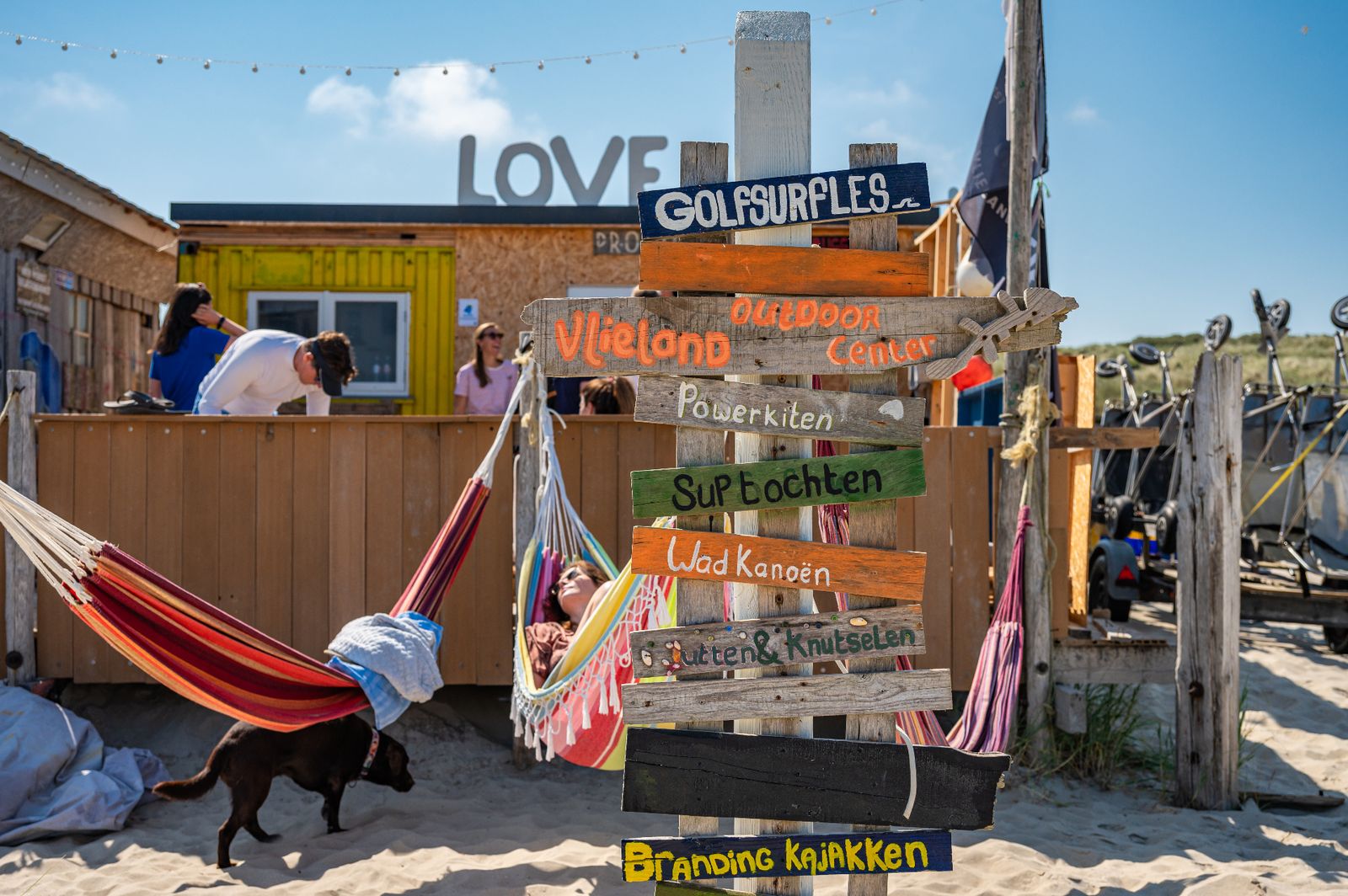
On most Wadden Islands, you can still hear a distinct language. On Terschelling, Aasters and Westers are spoken, on Ameland Amelands, on Schiermonnikoog Schiermonnikoogs. On Vlieland, you hear Dutch.
That is no coincidence, nor has it always been that way. There was a Vlielands, and it disappeared within two generations.
Not Frisian, but North Hollandic
The first thing that surprises people: Vlielands was not a Frisian dialect. It leaned towards the north of Noord-Holland, and especially towards Tessels. Anyone who finds that strange for a Frisian Wadden island is forgetting something. Until 1942, Vlieland did not belong to Friesland at all — it fell under the province of Noord-Holland. In the second year of the war, Vlieland and Terschelling were joined to Friesland by the occupying forces, and after the liberation that was never reversed.
The language therefore knew what the map did not yet know. Historically, Vlieland looked towards the south-west, towards Texel and the Zuiderzee, not towards the Frisian coast. Het Vlie was the connection, and Het Vlie ran towards Amsterdam.
What we do not know
What Vlielands was exactly, we only half know. It was never properly documented. There are word lists, a few recorded sentences, islanders' memories — but no grammar, no dictionary, no audio archive of any significance. Linguists wishing to say something about it have to make do with fragments.
The last speaker was Petronella de Boer-Zeylemaker. She died in 1993, 107 years old. With her disappeared the last living knowledge of a language that had been spoken on this island for centuries.
Why Vlieland lost its language and Terschelling did not is a question without a straightforward answer. The island was small — around 1900, roughly seven hundred people lived here. Schoolteachers, holidaymakers and civil servants arrived from the mainland. Young people left for the shore. In a community of that size, not much needs to happen before a language loses critical mass.
What remains
What remains is kept in names. In the dunes, on the beach, in the field names islanders still use that appear on no map. If you listen closely to how Vlielanders talk about their island, you hear words that occur nowhere else.
It is a quiet way to lose something. No disaster, no date, no monument. Only a woman of 107 who dies, and a language that ceases to exist along with her.
De onderwerpen van dit verhaal komen uit het archief van vlieland-info.nl, dat H.P. de Nijs ruim twintig jaar heeft bijgehouden. Zijn fotoarchief van Vlieland is te zien op Flickr.
Bronnen
Wikipedia (Vlielands), gemeente Vlieland, Wikikids over de provinciewissel van 1942.
Laatst bijgewerkt: 12 augustus 2026
Read more
History · 6 min read
How Vlieland lost its western village — the story of 1736
Vlieland once had two villages. By 1736, only two houses of the western one remained standing. The rest lay under water.
Culture · 6 min read
Over thirty listed buildings in one village street — a walk through Oost-Vlieland
Almost all of Vlieland’s listed buildings are on a single street. A walk of less than a kilometre past four centuries of island history.

Culture · 5 min read
Tromp's Huys: the oldest house on the island (1575)
Built in the year the village burnt to the ground, lived in by the Norwegian painter Betzy Akersloot-Berg, and a museum since 1956. The oldest house on Vlieland has had more lives than most islanders.